Wesley Slover - Sound: The Invisible Brand Layer

We sit down with Wesley Slover, founder of Sanctus Audio and the mind behind sounds you’ve probably heard through Discord, Asana, and Under Armour, without realizing it—to explore how audio shapes the way we experience products, brands, and everyday interactions.

Podcast
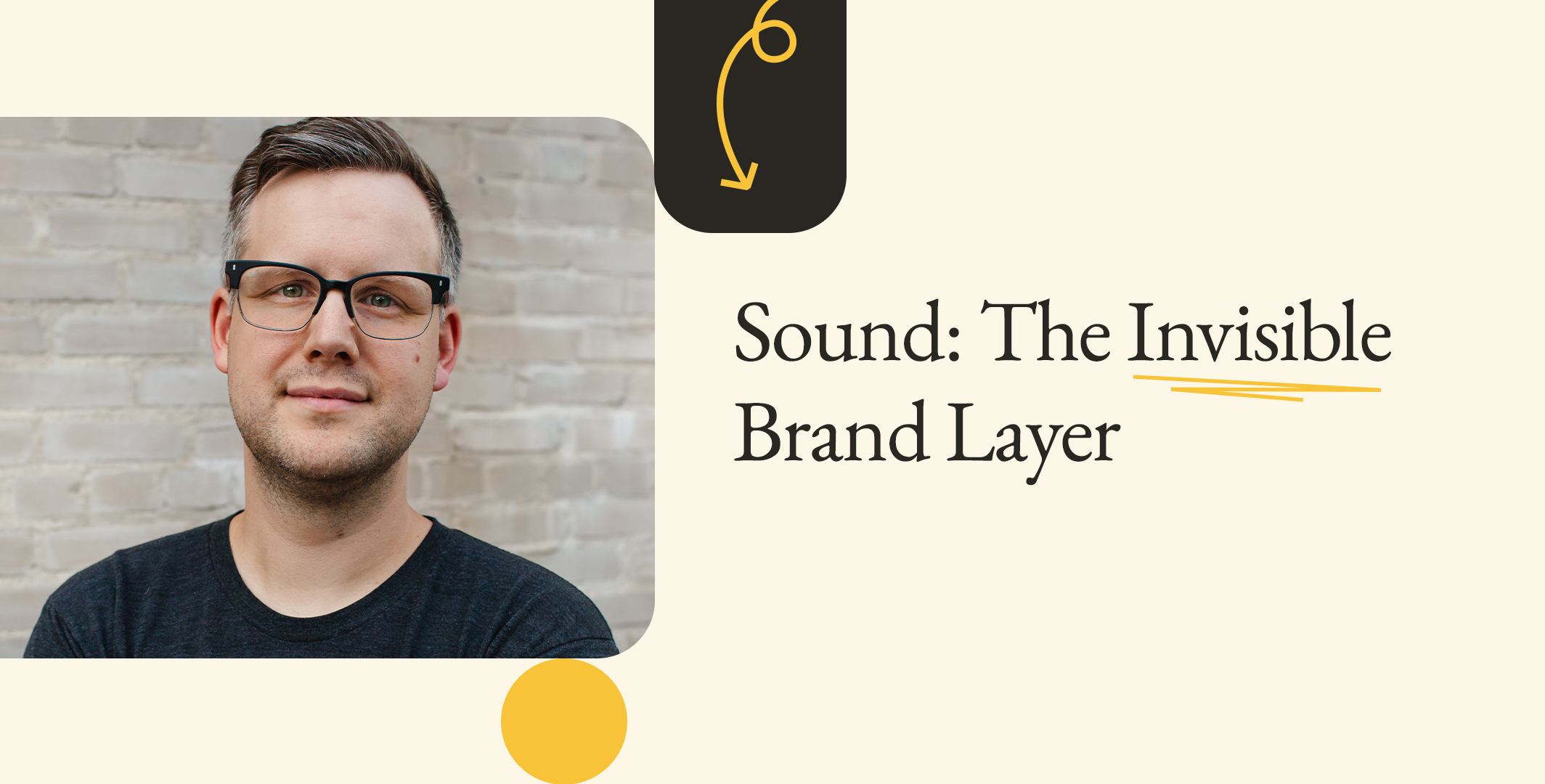
Headshot of Wesley Slover

Listen to the episode below.

Episode Recap

Wesley shares how he designs sound for real-world contexts, collaborating with clients, and the often invisible role audio plays in shaping perception as well as how communication, not just craft, has become central to his work.

From UX sounds in software and industrial machines to generative music in games, Garus and Wesley unpack the blurred line between music and sound design, and how audio can subtly guide behavior, enhance usability, and bring brand identity to life.


01 Sound has a job

The biggest throughline in Wes’s thinking is outcome-first audio. Instead of starting with “what should it sound like?”, he starts with what the audio needs to do: capture attention, reduce friction, build confidence, or sit in the background.


02 Sonic Branding Beyond the Logo

Wes’s Carbon example shows why sonic identity shouldn’t stop at an audio logo. The real unlock is extending that sound into product moments, so marketing and UX feel like the same brand.


03 Design for the environment

Wes emphasized that sound can turn into noise fast if you ignore scale and context. From industrial machines to Moonrakers: Luminor, the goal is the same: keep audio relevant, subtle, and supportive so it enhances the moment without taking it over.


04 Avoid “demo love”

Wes tries not to lead with temp tracks, because “demo love can be really hard to break.” Instead of asking, “what should it sound like?”, he starts with outcomes, how it should feel and what it needs to do. Then gets to something concrete quickly so the team can react to the real thing and build shared language from there.


05 Music: Stock vs Custom

Wes’s rule of thumb is story arc. Stock music usually holds one mood, while custom audio helps when a piece needs a real journey or precise “hit” moments. But if all you need is energy and a catchy spark, a great library track can be the better choice.


06 Communication is part of the craft

Wes has shifted from thinking his job is simply to deliver the best audio, to helping teams make decisions they can stand behind—especially when the work has to travel through producers, agencies, clients, and internal stakeholders.

“vibe coding” and prototyping as a collaboration tool

Wes didn’t bring up vibe coding as a tech flex, he brought it up as a new way to think through audio in context. He described being skeptical at first, then realizing how quickly he could turn a half-formed idea into something you can actually experience. His first experiment was an unfinished exercise timer for running and cycling, sparked by a long-held belief that fitness apps leave a lot of sound design potential on the table, especially when people are already listening to podcasts, audiobooks, or music.

What got interesting fast was the communication upside. Instead of explaining audio behaviors in a doc or over video references, Wes built the tools directly into the prototype, including a small drum machine where he could swap files and sequence sounds. That turns audio from a “describe it and hope” problem into a “try it and react” moment. For marketers and brand teams, it’s the same recurring challenge, alignment, solved in a new medium: faster shared understanding, fewer abstract debates, and a clearer path from intention to a felt experience.

Sound as a design decision

A big thread in the conversation is Wes’s worldview: sound is present in far more brand moments than we usually realise. Not just ads and videos, but product interactions, notifications, environments, and micro-moments that quietly shape emotional tone.

That matters because brand doesn’t just live in a pitch deck, blog post or whitepaper. It lives in how people experience the thing. Sound can communicate competence, calm, urgency, warmth, or premium-ness instantly, often without the user consciously noticing it.

When brands try to be “cool,” they can lose trust

One of the most marketing-relevant observations Wes shared: brands sometimes chase a trendy sound to communicate confidence or swagger, but unintentionally land on something that feels unserious. His role isn’t to dictate brand strategy, but to help teams see how a choice might cut against their real goal especially if that goal is credibility and trust.

Carbon as the clearest “brand → system” example

When we talk about Carbon, the key takeaway is how audio stops being “a piece” and becomes “a system.” Wes explains starting with an audio logo as a way to define a brand’s feeling and sound palette. Then extending that identity into UX sounds so the product experience reinforces the same brand cues. It’s a marketing lesson as much as a sound one: cohesion across touchpoints is what makes a brand feel real. When the product “sounds like the brand,” the brand story is felt.

Context is where brand gets won or lost

Wes is very grounded about the downside: sound can improve an experience, or make it worse. He talks about designing for real environments, like the difference between a facility with one machine and one with twenty. In one context, audio cues are helpful. In another, they become noise and people tune them out (or get irritated).

That’s brand trust in practice: respecting attention, giving control, and making sure audio supports the user’s world instead of fighting it.

Stock vs custom is a brand decision, not a music decision

We get into a practical marketer question: when do you invest in original audio vs. use stock? Wes’s framing is clear. Stock often holds one consistent mood. If your piece needs a journey (problem → uncertainty → payoff) or has precise moments that need musical “hits,” custom (or customized) becomes the better tool. But he’s not dogmatic: if what you need is a straightforward “spark” a pop-like bed that carries energy then starting with library music can be the smarter, simpler move. The point is intentionality: choose the approach that matches the job.

The hidden work is communication

One of the strongest themes is that Wes increasingly sees his job as helping teams make decisions they can stand behind as the work moves through stakeholders. He talks about how audio has to travel: to a producer, to an agency, to a client, to a boss. That chain is where “good” ideas can get diluted into “safe” ideas unless the intent is clearly communicated.

For marketers, that’s the difference between audio being “a nice layer” and audio being “a brand decision” with a rationale, something you can defend, align around, and ship with confidence.

Where to next?

This post is based on my conversation with Wesley Slover, founder of Sanctus Audio, on Creative Tangent, a podcast by The Booth. Wes helps brands and creative teams use sound more intentionally, and he has a refreshingly practical take on what audio is really doing in marketing: shaping perception and building trust.

In the full episode, we talk about why “sound has a job,” when stock music is enough (and when it isn’t), and how the best audio work often goes unnoticed—until it’s missing. If you want a grounded look at how sound can strengthen brand experience, this one’s worth a listen.

Related Insights
Thank you! Your submission has been received!
Oops! Something went wrong while submitting the form.