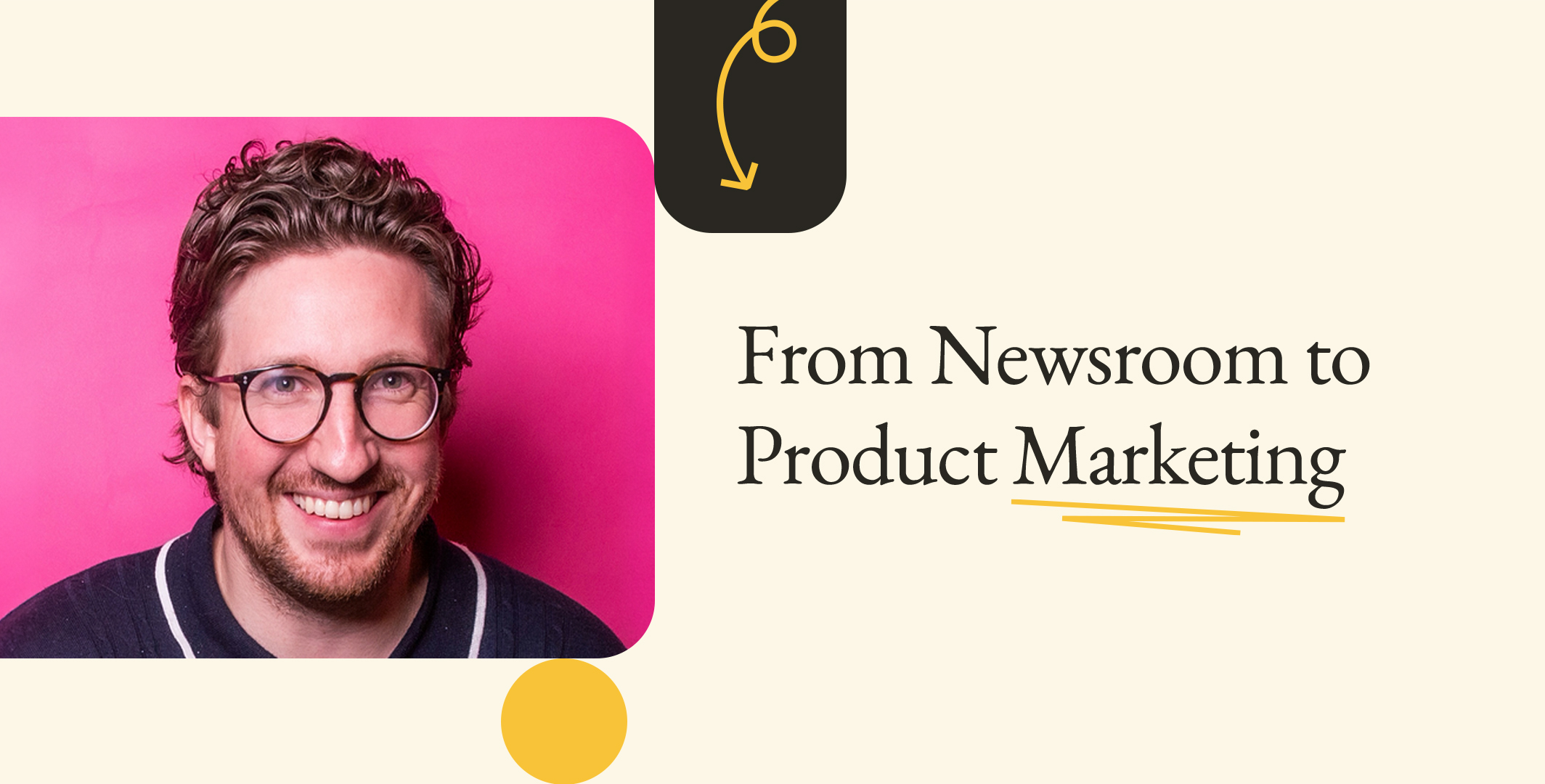
Lance Spence - From Newsroom to Product Marketing

Lance Spence joins us to explore what product marketing can learn from newsrooms, why PMMs often become the connective tissue inside a company, and how stronger internal relationships help complex ideas land.

Podcast

Listen to the episode below

Episode Recap

Lance Spence’s path into product marketing runs through journalism, television production, and creative work, and that mix gives him a grounded perspective on how stories actually get shaped inside a business.

In this episode, Lance shares how newsroom habits taught him to simplify complex information, write in a way real people can follow, and think carefully about the people responsible for carrying a message to market. The conversation moves through product marketing’s relationship with sales, product, customer success, and creative, then opens up into broader questions about trust, collaboration, AI, and the kind of judgment that still depends on people.

01

Great communication starts with simplicity

Lance talks about writing the way you’d explain something to a friend, especially when the product is technical and the audience is distracted.

02

Sales is part of the story, not just the handoff

One of the strongest ideas in the episode is that sales often carries the message the way an anchor carries a script on air. That makes their feedback especially valuable.

03

PMM is deeply cross-functional work

Product marketing sits in the middle of product, sales, customer success, and creative, which means a lot of the job is about building trust and helping different teams move in the same direction.

04

AI can speed up tasks, but not relationships

Lance sees real value in AI for faster execution, but he also makes the case that the relational side of the work still matters and can’t be automated away.

05

Knowing when to say no

Near the end of the conversation, Lance reflects on boundaries, better-fit opportunities, and the difference between taking any role and choosing the right one.

What the newsroom taught Lance about communication

Lance’s background is a big part of what makes this conversation interesting. Before product marketing, he worked in alternative music, video editing, journalism, and television production. Producing a one-hour show every weekday meant learning how to stay close to the story, work across strong personalities, and make information usable under pressure.

That experience still shapes how he thinks. He talks about the reps that came from turning complex information into scripts that actually sounded human on air, and how that same instinct now shows up in messaging, positioning, and go-to-market work.

Why product marketing often becomes the connective tissue

A core thread in the episode is Lance’s view of PMM as one of the most interconnected roles in a business. He describes product marketing as sitting between product, sales, and customer success, with constant overlap into creative and marketing.

What makes that valuable is not just the work itself. It’s the ability to translate between groups that care about different things, speak different languages, and need different levels of detail. Lance frames that part of the role as less about polish and more about helping the right message move clearly through the company.

Sales feedback is really a usability test

One of the most practical parts of the episode is Lance’s point about involving sales early. If a team creates material for sales and sales can’t use it in the room, then it isn’t useful yet.

That perspective shifts feedback away from preference and toward function. The real question becomes: how does this play in the room? What helps a salesperson explain it clearly? What gets in the way? It’s a simple idea, but it says a lot about how Lance thinks about usefulness, not just output.

Creative work gets better when the brief gets clearer

Lance also gets into the friction that can happen between PMMs and creatives. Sometimes the issue is not a lack of information but too much of it. When product marketers know the product too deeply, they can hand over documentation instead of direction.

That part of the conversation lands because it’s honest about the challenge. Creative people still need room to make something strong, but they also need a clear understanding of what matters, what the audience needs to understand, and what the work is supposed to do. The better that handoff gets, the better the creative usually gets too.

AI may speed up output, but it still misses the human layer

Later in the episode, the conversation turns to AI and what it means for product marketing and creative work. Lance is clear that AI can help teams move faster. It can support messaging, mockups, competitive work, and other tasks that used to take longer.

But he also points to the part that still resists automation: taste, relationships, judgment, and the trust that builds up between people over time. That’s where the episode becomes bigger than a PMM conversation. It turns into a conversation about how work gets made when collaboration still matters.

Knowing when to say no

Toward the end, Lance reflects on career decisions, fit, and the challenge of saying no. It’s a quieter part of the episode, but it gives the conversation a lot of heart.

He talks about wanting to build something meaningful with the right team, not just take any role for the sake of movement. That thread connects back to the rest of the episode in a useful way. Strong work depends on clarity, but it also depends on choosing the environments where clarity, trust, and collaboration have room to exist.

Where to next?

This post is based on our conversation with Lance Spence on Creative Tangent, a podcast by The Booth. Lance brings a rare combination of newsroom discipline, creative background, and product marketing experience, which gives him a practical perspective on how teams turn complexity into stories people can actually use.

In the full episode, we go deeper into what product marketing looks like across teams, what sales feedback can reveal about messaging, where AI helps and where it still falls short, and why stronger internal relationships often lead to better work. If you like thoughtful conversations about product marketing, collaboration, and the human side of clear communication, this one is worth your time.

Related Insights
Thank you! Your submission has been received!
Oops! Something went wrong while submitting the form.