Elaine Kwok - From Marketing Leader to Founder

Elaine Kwok, marketing leader and co-owner of Go Banana Marketing, joins us on Creative Tangent to unpack how marketers can simplify complex products, make safer ideas more useful, and build messaging around what actually moves buyers.

Podcast
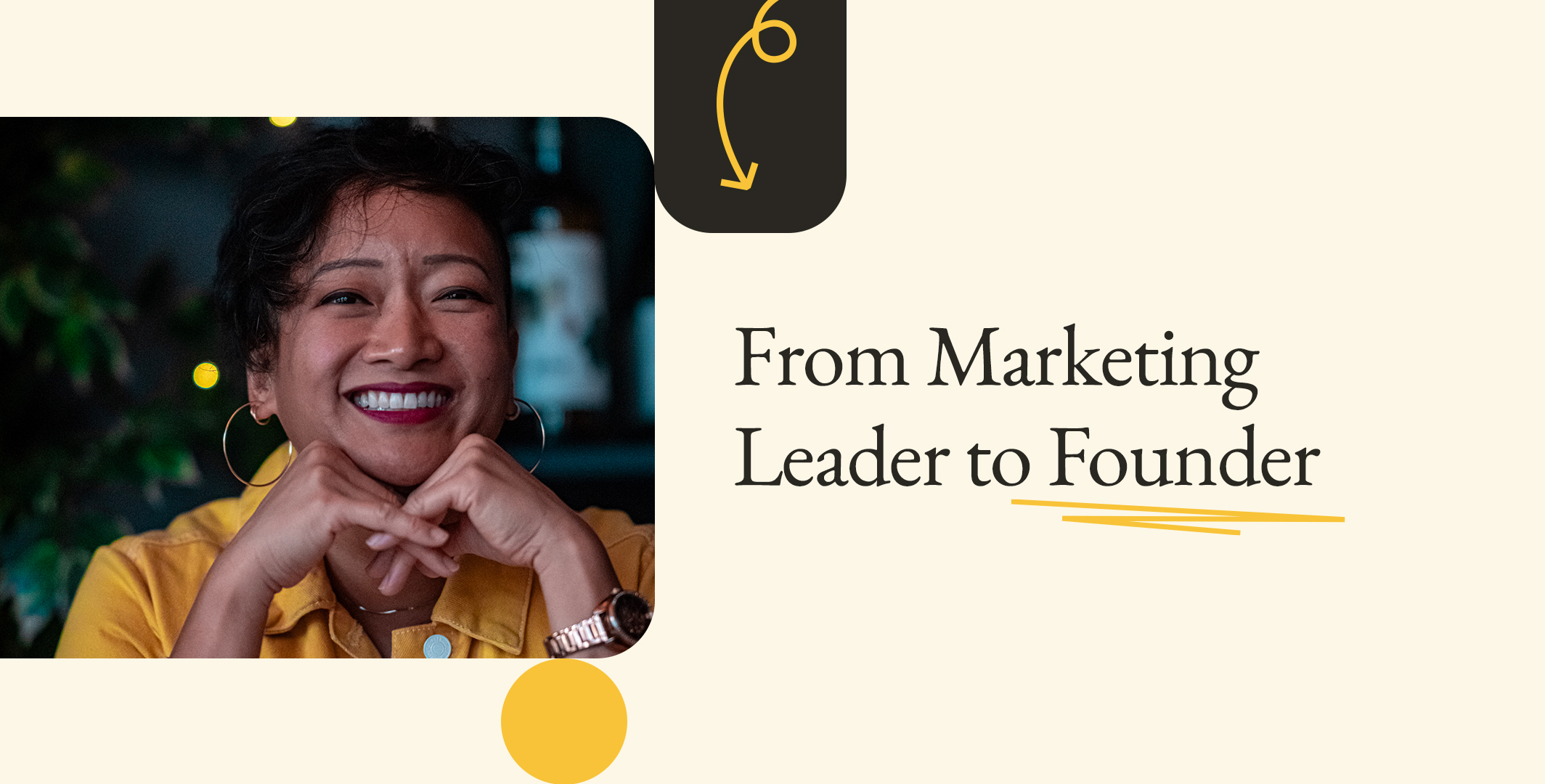
Headshot of Elaine Kwok

Listen to the episode below

Episode Recap

What makes this conversation useful is how grounded Elaine is in the tension between strategy and reality. She is not interested in complexity for its own sake. She is interested in what helps people understand, decide, and act.

What stood out in this conversation was Elaine’s honesty. She talks about complexity without glamorizing it, about creativity without treating it like guesswork, and about strategy in a way that stays tied to what actually helps deals move.

01

Complexity is not the message

A company might love how sophisticated its product is, but the customer is usually asking a simpler question: what does this do for me?

02

Safe work can become risky

Elaine makes a sharp point here. Repeating what everyone else is doing may feel comfortable, but if it stops creating results, it is not really safe anymore.

03

Deals move for practical reasons

Purpose matters, but buyers still make decisions through the lens of cost, value, and trade-offs. Messaging has to reflect that reality.

04

Marketing is not purely science or purely art

Elaine frames marketing as a blend of craft, evidence, psychology, and a little unpredictability.

05

Testing beats guessing

Creative ideas need a plan behind them. Not just “let’s try it,” but how success will be measured and what the team is actually learning.

06

What people say is not always what they do

Research is useful, but it has limits. The strongest marketers leave room to learn from real behaviour.

Nobody Cares About the Complexity

One of Elaine’s strongest points is that companies can become too attached to the complexity of their own product. Internally, that complexity feels like proof of value. Externally, it often becomes noise.

Elaine is not dismissing the work behind a product. She is pointing out that audiences do not buy complexity for its own sake. They care about relevance, clarity, and whether something improves their situation. “you have to talk to the person about what is their job like and how this going to help.” That shift is where stronger messaging starts.

Safe Is Not Always Safe

Another strong thread in the conversation is Elaine’s view on “safe” marketing. A lot of teams equate safe with sensible. Elaine challenges that. “If staying safe doesn't bring the outcome you want, then it's no longer safe. It's no longer useful.” That is a strong framing because it redefines risk. The risk is not only in trying something different. The risk is also in repeating familiar work that fails quietly. That does not mean being reckless. It means being willing to make distinct choices when sameness is no longer doing the job.

The Message That Wins Is the Message That Moves the Deal

One of the most engaging parts of the conversation is Elaine’s clean tech example of adjusting messaging based on what sales conversations were actually revealing. Instead of leaning too heavily on the environmental side of the story, the team increased the emphasis on savings because that was the lever influencing real decisions. “it was actually the thing that that closed deals.” This is such a useful reminder for marketers. The story you want to tell is not always the story the buyer needs most. Good strategy listens for the point where brand, buyer motivation, and commercial reality meet.

Marketing Is Art, Data, Magic & Psychology

Elaine has a great way of describing the tension inside good marketing work. “marketing is art and data, but it's also a little bit of magic." That line works because it gives space to both intuition and discipline. Marketing is not just spreadsheets, and it is not just taste. It lives in the overlap. That is also why strong teams create room for creative ideas while still grounding those ideas in a process.

You Cannot Just Go on Vibes

Elaine’s answer here is especially strong because it balances curiosity with accountability. “This is how we're going to test it. This is how we're going to measure success.” That mindset keeps experimentation from turning into randomness. “we can't really go on vibes.” And then she sharpens the point further: “having informed choices. And the creative is informed by that too.” That is a useful line for anyone trying to bridge strategy and creative. Data is not there to flatten the idea. It is there to make the idea more informed.

Research Helps. Behaviour Decides.

Elaine also makes space for uncertainty, which is one of the more mature ideas in the conversation. Research can guide you, but it cannot remove ambiguity completely. “the way people think they feel about things doesn't always result in how they act.” That is such a strong marketing truth. People do not always report themselves accurately. They do not always buy for the reasons they say they do. And they do not always behave in neat, rational ways. So instead of pretending certainty, Elaine describes a more honest approach: "according to all our research, this is going to work, but let's see if it actually does.” And then the key line: “Let's see what people's behavior actually tells us.”

That is the kind of thinking that keeps a team open, strategic, and grounded at the same time.

Where to next?

This post is based on my conversation with Elaine Kwok, a marketing leader and co-owner of Go Banana Marketing, on Creative Tangent, a podcast by The Booth. Elaine brings a sharp, grounded perspective on how marketing really works when complexity, buyer psychology, and business reality all collide.

In the full episode, we dig further into why audiences do not care about complexity for its own sake, when safe marketing stops being useful, how data and creativity shape each other, and why real behaviour matters more than assumptions. If you like thoughtful conversations about how good marketing gets made, this one is worth your time.

Related Insights
Thank you! Your submission has been received!
Oops! Something went wrong while submitting the form.